NEWS

The 20th ISDE International Lectures, with the theme of “Climate Change Risk and Regenerative Economics: Implications for Digital Earth”, took place on 13 May 2026. Three invited speakers explored emerging climate risks and tipping points, carbon incentive policies, and the transformative potential of Digital Earth value exchange infrastructures, highlighting how the convergence of climate science, economic policy, and digital technologies can enhance climate resilience and drive progress toward a healthier planet.
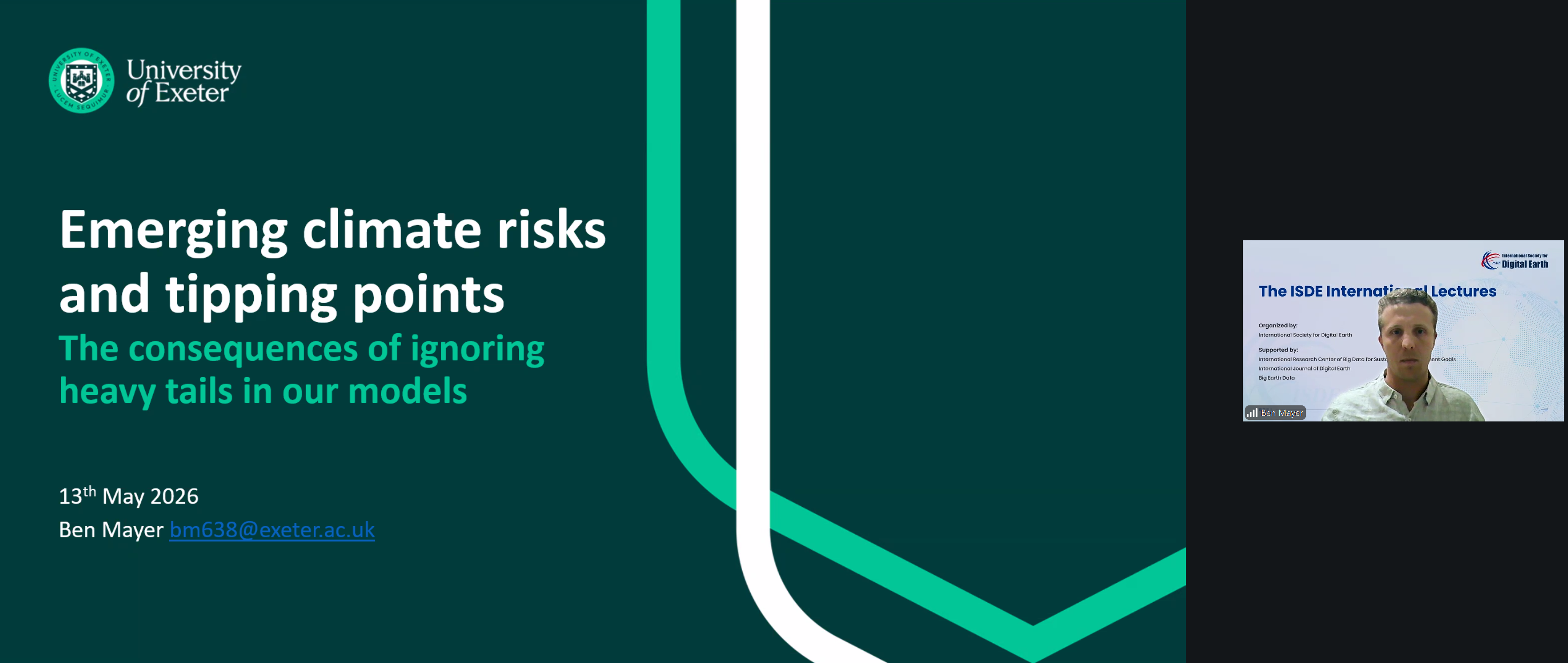
Ben Mayer from University of Exeter delivered a presentation titled “Emerging Climate Risks and Tipping Points”. He first shared key findings from the Global Tipping Points Report at the University of Exeter, highlighting a long-standing dangerous disconnect between climate science warnings and economic decision-making models, which has severely affected climate policy and corporate action. Using observational data, he outlined global warming, planetary boundary overshoot and multiple climate tipping point risks, stressing that warm-water coral reefs, polar ice sheets, the Atlantic meridional overturning circulation and other systems are approaching irreversible thresholds, leading to severe outcomes including global food production losses and non-linear economic damages. He criticized traditional economic models for drastically underestimating tipping point harms, called for a tails-based risk-opportunity analysis (ROA) decision framework, and highlighted positive tipping points such as electric vehicle transition, urging integration of scientific and economic perspectives and upgraded decision-making models to address the climate crisis.
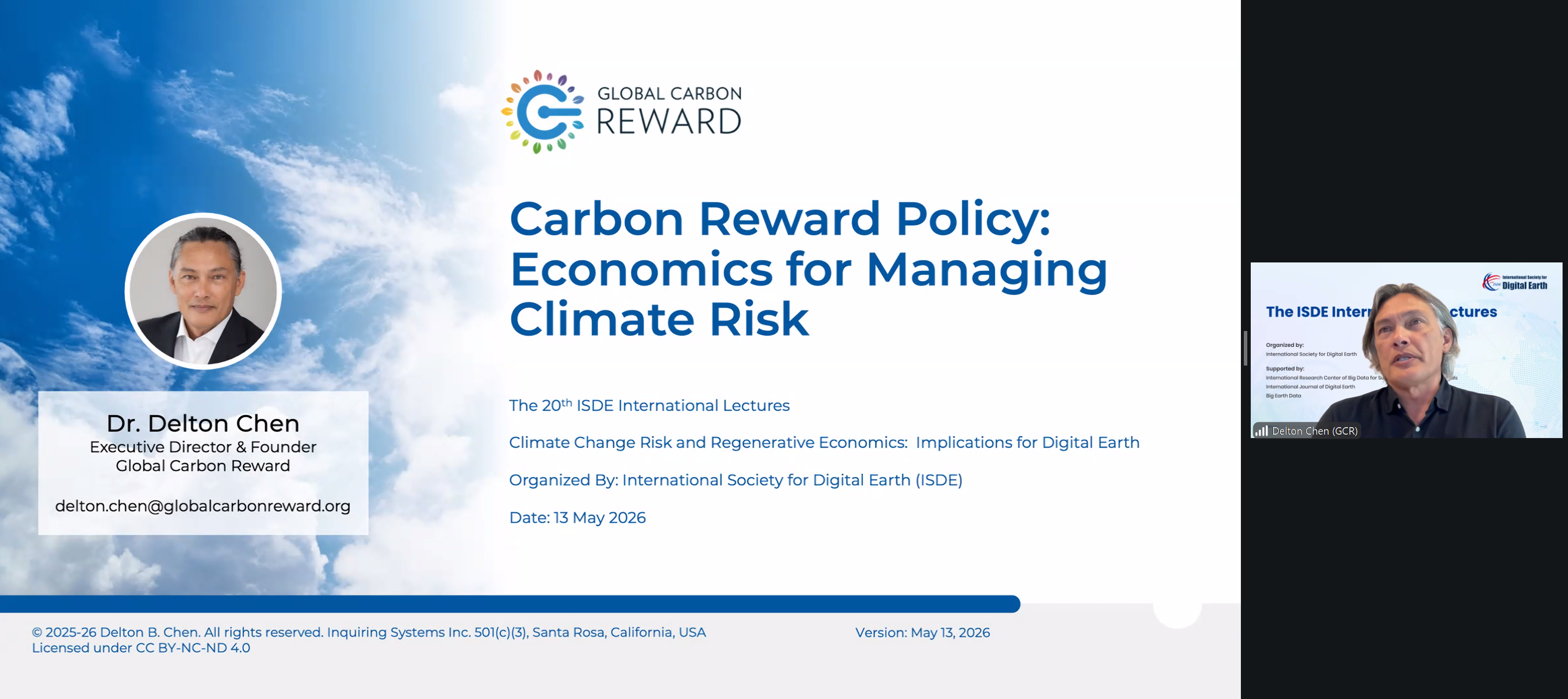
Delton B. Chen, Executive Director & Founder of the Global Carbon Reward, presented on “Carbon Reward Policy: Economics for Managing Climate Risk”. He stated that amid global ecological crisis, humanity has advanced Earth Observation infrastructure but lacks effective financial mechanisms for large-scale climate action. He introduced the Global Carbon Reward initiative, which corresponds to Digital Earth Strategic Vision Framework 6 and provides key value exchange infrastructure to monetize Earth Observation and scale climate impact. He explained that the initiative uses a sovereign-backed financial instrument Carbon Rewards (XCR), which treats mitigated carbon as a “central bank asset” with stable long-term value, outperforming traditional carbon markets. The carbon reward policy aligns closely with Digital Earth in data application, polycentric governance, equitable value distribution and adaptive governance. He stressed that carbon reward serves as the financial nervous system of Digital Earth and called on the community to support XCR feasibility studies and real-world pilots.

Richard Simpson, President of the International Society of Digital Earth (ISDE), and CEO & Founder of Meta Moto, delivered a presentation titled “The Measure of What Matters: Digital Earth Framework 6 and the Future of Planetary Value”. He highlighted that climate finance and carbon reward policies increasingly address systemic risks within the carbon cycle, yet require a planetary-scale verification and governance architecture to operate credibly. Framework 6 positions Digital Earth as the core economic coordination layer, connecting Earth Observation systems with policy and financial instruments to translate verified planetary intelligence into trusted economic signals. Richard noted that Framework 6 bridges climate finance design and Digital Earth implementation, embeds ecological metrics into financial decision-making, enables traceable carbon accounting, and advances Digital Earth from a knowledge platform into a fully operational economic coordination system.
The event was moderated by Delton B. Chen, and attracted over 5,100 participants from around the world through Zoom and many other live streaming platforms.
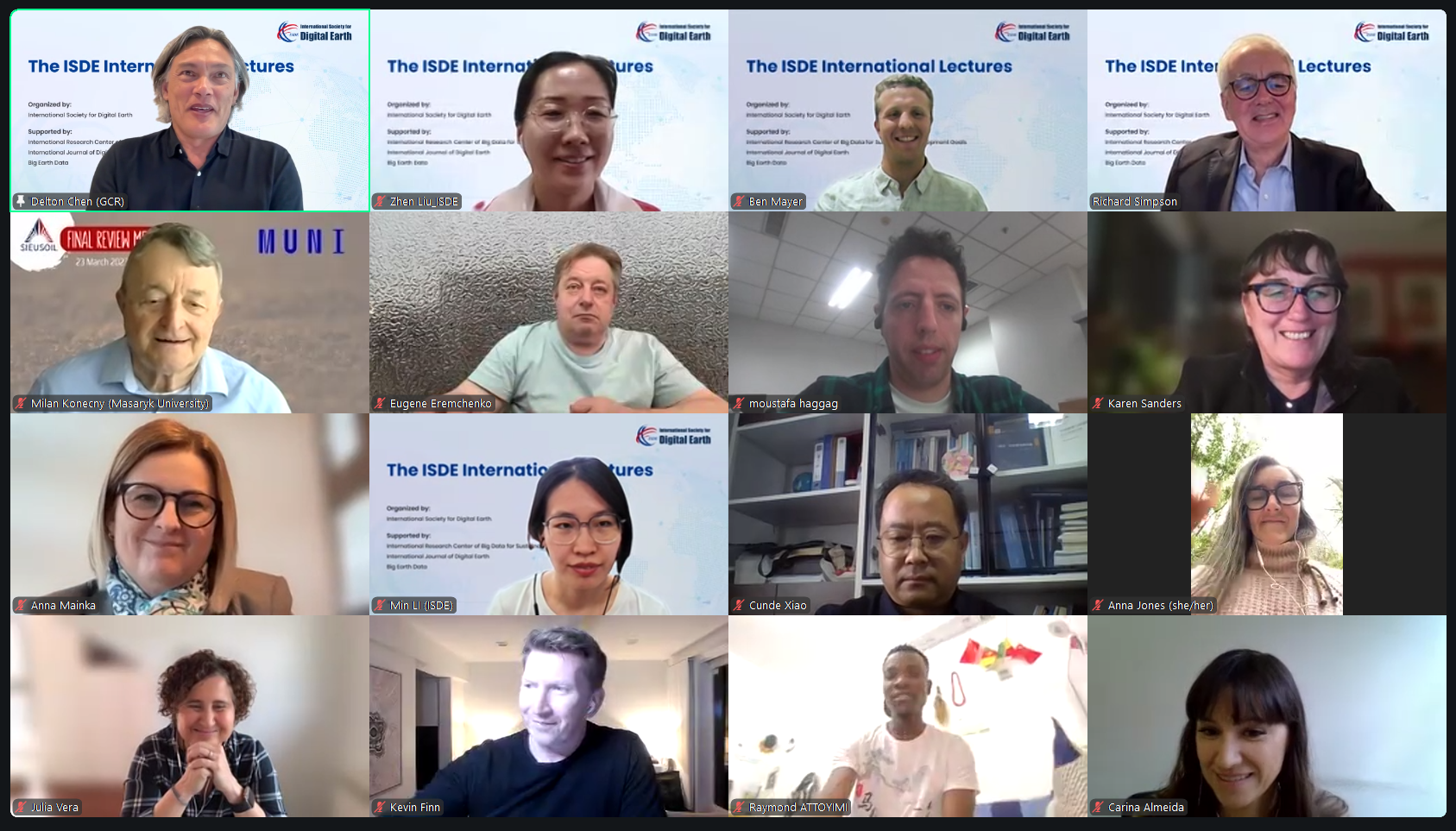

The ISDE International Lectures are organized by the International Society for Digital Earth (ISDE) and supported by the International Research Center of Big Data for Sustainable Development Goals (CBAS). It is a series of online events which feature invited lectures by well-known international experts in the field of Digital Earth. The purpose of the events is to bring international scholars in the relevant research fields of Digital Earth together to exchange academic perspectives, share research results, and disseminate the most cutting-edge concept of Digital Earth.